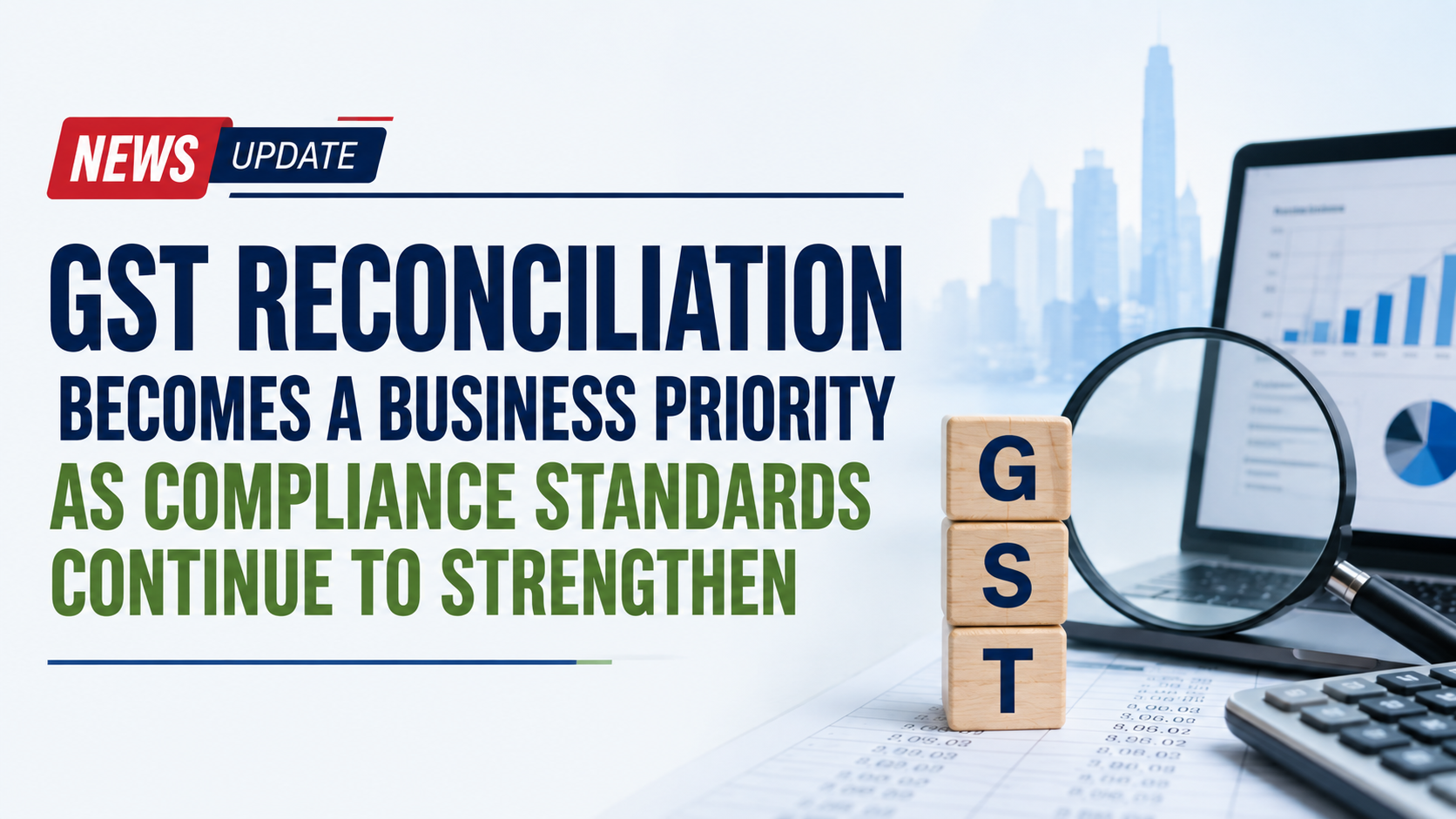
GST Reconciliation Becomes a Business Priority as Compliance Standards Continue to Strengthen
Businesses across India are placing greater emphasis on regular GST reconciliation as tax compliance and financial accuracy become increasingly important. With companies handling large volumes of invoices every month, reconciling purchase and sales records with GST return data has become a key step in avoiding filing errors and ensuring eligible Input Tax Credit (ITC) claims. Tax professionals note that proactive reconciliation helps businesses maintain accurate records while reducing compliance risks.
The increasing use of digital accounting software and GST automation solutions is helping businesses of all sizes complete reconciliation more quickly and accurately.
These solutions enable companies to identify invoice mismatches, missing entries, and ITC discrepancies before filing returns, reducing the likelihood of notices, penalties, and delayed tax credits. Small and medium-sized enterprises (MSMEs) are particularly benefiting from automated reconciliation as they seek to improve financial management with limited resources.
Industry experts believe that regular GST reconciliation is no longer just a compliance requirement but also a best practice for sound financial management. Businesses that reconcile their GST records every month are better positioned to maintain transparent accounting, improve cash flow through accurate ITC claims, and stay prepared for audits. As digital tax compliance continues to evolve, timely GST reconciliation is expected to remain a critical part of responsible business operations.