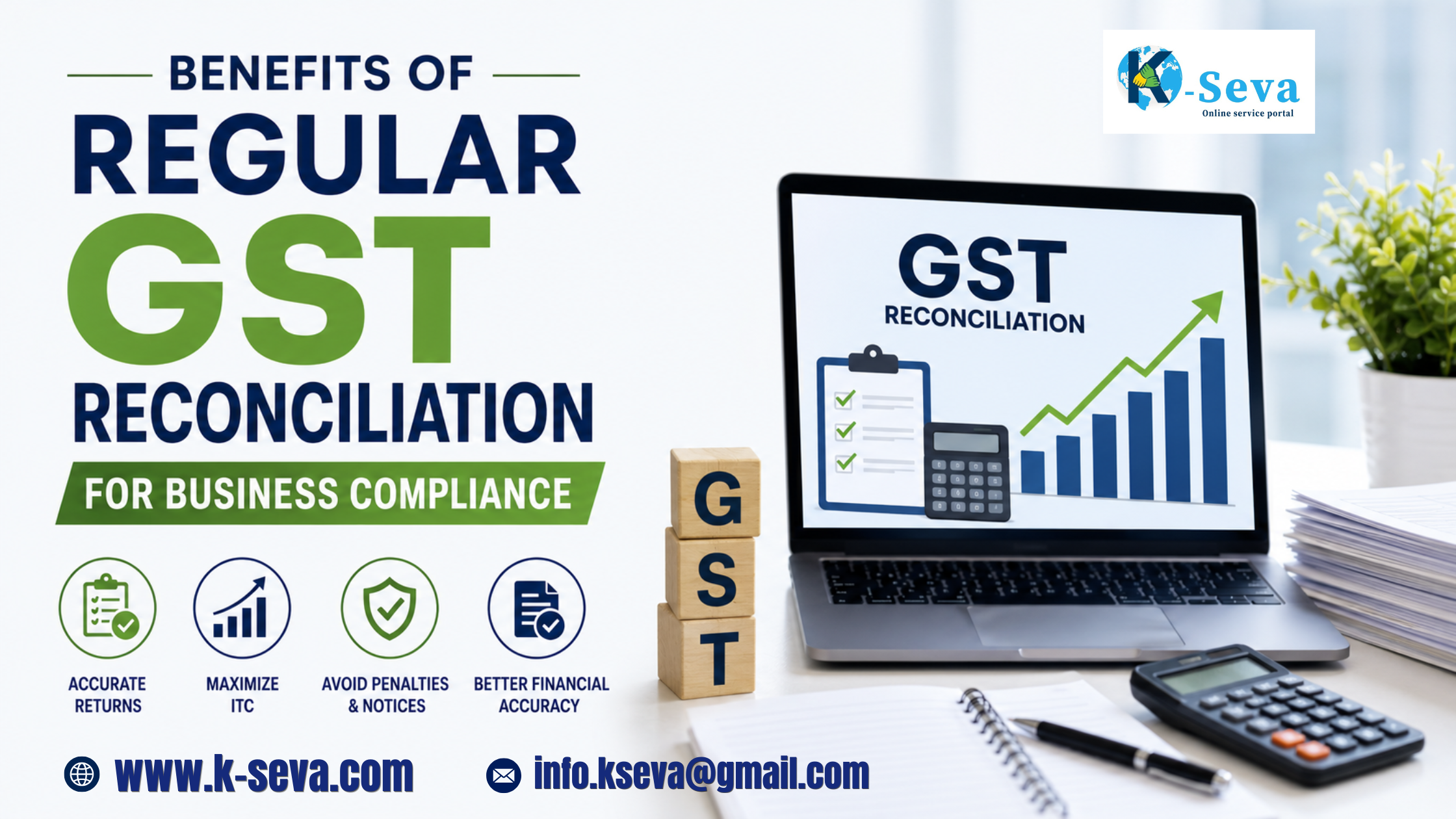
Benefits of Regular GST Reconciliation for Business Compliance
Goods and Services Tax (GST) compliance is an essential part of running a business in India. While filing GST returns on time is important, regular GST reconciliation plays an equally significant role in ensuring accurate tax reporting and avoiding compliance issues. GST reconciliation involves comparing your business records with the data available on the GST portal to identify and resolve discrepancies before filing returns.
For businesses of all sizes, regular reconciliation helps maintain accurate financial records, minimizes the risk of penalties, and improves overall tax compliance. Whether you operate a small business, an MSME, or a large enterprise, making GST reconciliation a routine practice can save both time and money.
What Is GST Reconciliation?
GST reconciliation is the process of matching your business's sales, purchases, input tax credit (ITC), invoices, and GST returns with the records available on the GST portal. The objective is to identify mismatches, rectify errors, and ensure that the information submitted to the tax authorities is accurate.
Regular reconciliation helps businesses detect missing invoices, duplicate entries, incorrect GST amounts, or mismatched supplier information before they become compliance issues.
Why Regular GST Reconciliation Is Important
Businesses process numerous invoices and transactions every month. Even a minor error can lead to incorrect GST filings, delayed refunds, or notices from tax authorities.
Key Benefits of Regular GST Reconciliation
1. Ensures Accurate GST Return Filing
One of the biggest advantages of regular reconciliation is improved accuracy in GST returns.
By matching purchase and sales records with GST portal data, businesses can identify errors before filing returns, reducing the chances of incorrect tax reporting.
Accurate GST returns help businesses remain compliant and avoid unnecessary corrections later.
2. Maximizes Input Tax Credit (ITC)
Input Tax Credit is a valuable benefit available under GST, but businesses can claim it only when supplier invoices match the GST records.
Regular GST reconciliation helps:
- Verify supplier invoices
- Identify missing invoices
- Detect ITC mismatches
- Ensure eligible tax credits are claimed
This helps businesses optimize their tax savings.
3. Reduces the Risk of Notices and Penalties
Incorrect GST filings may attract notices from tax authorities.
Regular reconciliation enables businesses to identify discrepancies early and rectify them before filing returns.
This significantly reduces the chances of penalties, interest charges, and compliance-related issues.
4. Improves Financial Accuracy
GST reconciliation ensures that accounting records match actual business transactions.
This improves the reliability of:
- Sales records
- Purchase records
- Tax liability calculations
- Financial statements
Accurate financial records support better business planning and decision-making.
5. Detects Invoice Errors Early
Mistakes in invoices are common and may include:
- Incorrect GSTIN
- Wrong tax amount
- Duplicate invoices
- Missing invoices
- Incorrect invoice numbers
Regular reconciliation helps businesses identify and correct these errors before they impact GST filings.
6. Strengthens Vendor Compliance
Businesses depend on suppliers to upload invoices correctly.
Regular GST reconciliation helps identify vendors who fail to:
- Upload invoices
- File GST returns on time
- Report transactions accurately
This enables businesses to follow up with vendors and maintain smooth tax compliance.
7. Saves Time During GST Filing
Businesses that reconcile GST records monthly face fewer issues while filing returns.
Instead of searching for errors at the last minute, businesses already have updated and verified records.
This makes GST return filing faster and more efficient.
8. Helps Maintain Better Cash Flow
Incorrect ITC claims or tax calculations may increase tax liability unnecessarily.
Regular GST reconciliation ensures businesses claim the correct tax credits, helping reduce excess tax payments and improve cash flow management.
Healthy cash flow supports smoother business operations.
9. Supports Business Audits
During financial or GST audits, businesses must produce accurate records.
Regular reconciliation ensures documentation is complete and organized, making audits easier and reducing compliance risks.
Well-maintained records also improve transparency.
10. Enhances Overall Business Compliance
GST reconciliation is not just about filing returns.
It also demonstrates that a business follows proper accounting practices and complies with tax regulations consistently.
Businesses with strong compliance practices often experience fewer regulatory issues and build greater credibility.
Best Practices for Regular GST Reconciliation
Businesses can improve reconciliation accuracy by following these practices:
Perform Monthly Reconciliation
Monthly reconciliation helps identify discrepancies before return filing deadlines.
Verify Supplier Invoices
Ensure suppliers upload invoices correctly on the GST portal.
Maintain Organized Records
Keep all invoices, purchase records, and GST documents properly maintained.
Use Reliable GST Software
Automated reconciliation tools reduce manual errors and save time.
Resolve Discrepancies Promptly
Address mismatches immediately instead of waiting until annual reconciliation.
Review Input Tax Credit Regularly
Verify ITC eligibility before claiming tax credits.
Common GST Reconciliation Challenges
Businesses may encounter challenges such as:
- Missing invoices
- Incorrect GSTIN details
- Duplicate transactions
- Delayed supplier filings
- ITC mismatches
- Manual accounting errors
Regular reconciliation helps identify and resolve these issues before they become major compliance concerns.
Who Should Perform GST Reconciliation?
GST reconciliation is beneficial for:
- Small businesses
- MSMEs
- Retailers
- Manufacturers
- Service providers
- Wholesalers
- Exporters
- E-commerce businesses
- Large enterprises
Any GST-registered business can benefit from maintaining accurate tax records through regular reconciliation.
How Professional GST Reconciliation Services Help
Professional GST service providers simplify the reconciliation process by:
- Matching invoices with GST records
- Identifying discrepancies
- Assisting with ITC verification
- Supporting accurate GST return filing
- Reducing compliance risks
- Saving valuable business time
Their expertise helps businesses focus on growth while ensuring tax compliance.
Conclusion
Regular GST reconciliation is an essential practice for maintaining business compliance, improving financial accuracy, and ensuring smooth GST return filing. By identifying discrepancies early, businesses can maximize Input Tax Credit, reduce the risk of penalties, strengthen vendor compliance, and maintain transparent financial records.
Whether you are a small business or a large enterprise, making GST reconciliation a regular part of your accounting process can simplify compliance and contribute to long-term financial stability. Partnering with a trusted service provider such as K-Seva can further streamline the reconciliation process, helping your business stay compliant and confident in every GST filing.