Common Mistakes to Avoid While Filing GSTR-9
Filing GSTR-9, the annual GST return, is an important compliance requirement for eligible taxpayers. It provides a consolidated view of GST-related transactions, including outward supplies, inward supplies, input tax credit (ITC), and taxes paid during the financial year. Since the return contains information collected from different GST returns and records, even small errors can create discrepancies.
Businesses should therefore review their GST data carefully before submitting GSTR-9. Here are some common mistakes to avoid while filing the annual return.
1. Entering Incorrect Turnover Details
One of the most common mistakes is reporting incorrect turnover figures in GSTR-9. Businesses may have differences between their books of accounts, GSTR-1, GSTR-3B, and other GST records.
Before filing, taxpayers should reconcile their annual turnover with accounting records and previously filed GST returns. Any differences should be identified and reviewed before submitting the annual return.
2. Ignoring Input Tax Credit Differences
Input Tax Credit is an important part of GST compliance. Differences may occur between the ITC recorded in the books, claimed through GSTR-3B, and reflected in relevant GST records.
Businesses should carefully check eligible, ineligible, reversed, and reclaimed ITC before reporting the figures in GSTR-9. Proper reconciliation can help reduce the possibility of incorrect reporting.
3. Not Reconciling GSTR-1 and GSTR-3B
GSTR-1 primarily contains details of outward supplies, while GSTR-3B reports summary figures of taxable supplies, tax liability, and ITC.
Failing to compare these returns can result in mismatched sales and tax figures. Businesses should reconcile the information reported throughout the year before preparing their annual return.
4. Overlooking Amendments Made During the Year
GST transactions may be amended after the original return has been filed. Businesses sometimes overlook these amendments when preparing their annual return.
Review amendments, credit notes, debit notes, and adjustments made during the financial year to ensure that the final figures reported in GSTR-9 are accurate.
5. Incorrect Reporting of Tax Paid
Another mistake is entering incorrect tax payment details. Businesses should compare the tax liability reported in their GST returns with the actual tax paid through the GST system.
The figures for IGST, CGST, SGST/UTGST and cess, wherever applicable, should be reviewed carefully before final submission.
6. Missing Credit Notes and Debit Notes
Credit notes and debit notes can affect taxable turnover and tax liability. If these transactions are not properly accounted for, the figures in the annual return may not match the business records.
Maintain proper records of all applicable credit notes, debit notes, and related adjustments and ensure they are appropriately considered while preparing GSTR-9.
7. Filing Without Proper Reconciliation
Relying only on figures downloaded or carried forward from GST returns without comparing them with the company's accounting records can create problems.
A proper GST reconciliation process should be completed before filing. Businesses should compare GST returns with sales registers, purchase records, tax payment records, and ITC details.
8. Missing Important Information
Businesses may accidentally leave relevant information incomplete or report figures under an incorrect category. Such errors can affect the accuracy of the annual return.
Before submission, review each applicable section carefully and make sure that the information is supported by proper books and GST records.
9. Waiting Until the Last Minute
Delaying GSTR-9 preparation can make the reconciliation process more difficult, especially for businesses with a large number of transactions.
Starting early gives businesses sufficient time to identify discrepancies, collect documents, reconcile data, and make necessary corrections before the applicable filing deadline.
10. Not Reviewing the Return Before Filing
One of the most important steps is reviewing the completed return before submission. Taxpayers should verify the information displayed in the return and ensure that the figures are consistent with their records.
Since mistakes in an annual return can be difficult to address after filing, careful verification before final submission is essential.
How to Prepare for GSTR-9 Filing
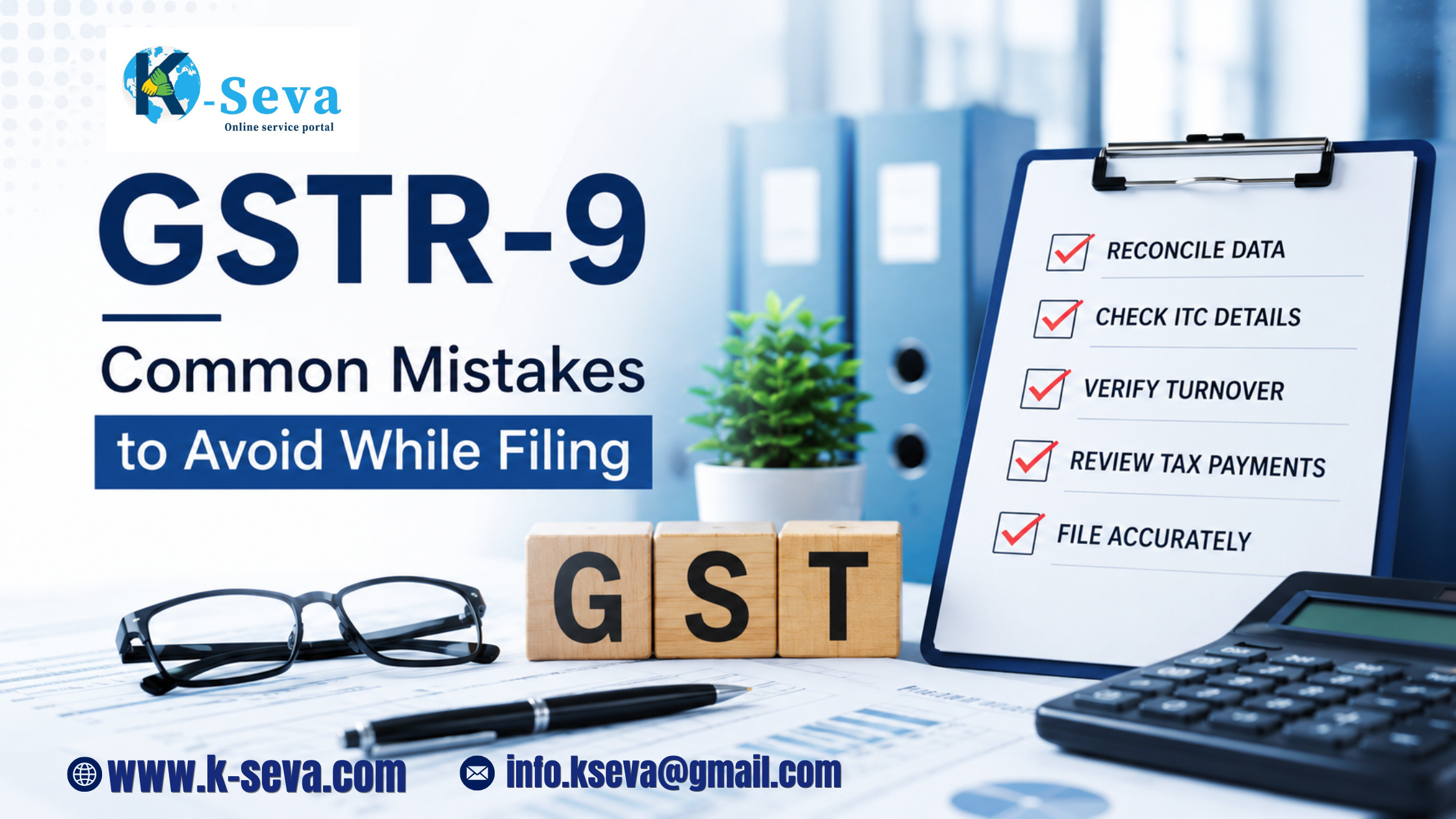
Businesses can make the filing process easier by maintaining accurate GST records throughout the financial year. Before preparing GSTR-9, consider the following checklist:
- Reconcile sales with GSTR-1 and books of accounts.
- Compare tax liability with GSTR-3B.
- Review ITC claimed and reversed during the year.
- Check credit notes and debit notes.
- Verify tax payments.
- Review amendments and adjustments.
- Keep financial and GST records organised.
- Check all figures before submitting the return.
Proper preparation can help businesses reduce discrepancies and improve the accuracy of their annual GST compliance.
Why Accurate GSTR-9 Filing Matters
GSTR-9 provides an annual summary of a taxpayer's GST activities. Accurate reporting helps businesses maintain better GST records and compliance practices.
Errors or inconsistencies may require further clarification or reconciliation. By reviewing information carefully and completing the required checks before filing, businesses can reduce the risk of avoidable mistakes.
Conclusion
Filing GSTR-9 accurately requires careful preparation and reconciliation. Incorrect turnover, ITC mismatches, overlooked amendments, missing credit notes, and errors in tax payment details are some of the common issues businesses should watch for.
Starting the preparation process early and comparing GST returns with accounting records can make annual filing more organised. For businesses that need assistance with GST compliance, professional support can also help simplify GSTR-9 preparation, reconciliation, and filing.