GST Reconciliation: A Complete Guide for Businesses
In today’s GST environment, maintaining accurate tax records is essential for smooth business operations and compliance. GST reconciliation is the process of comparing a company's financial records with GST return data to identify mismatches, errors, or missing transactions. Regular reconciliation helps businesses claim accurate Input Tax Credit (ITC), avoid penalties, and ensure proper GST compliance.
What is GST Reconciliation?
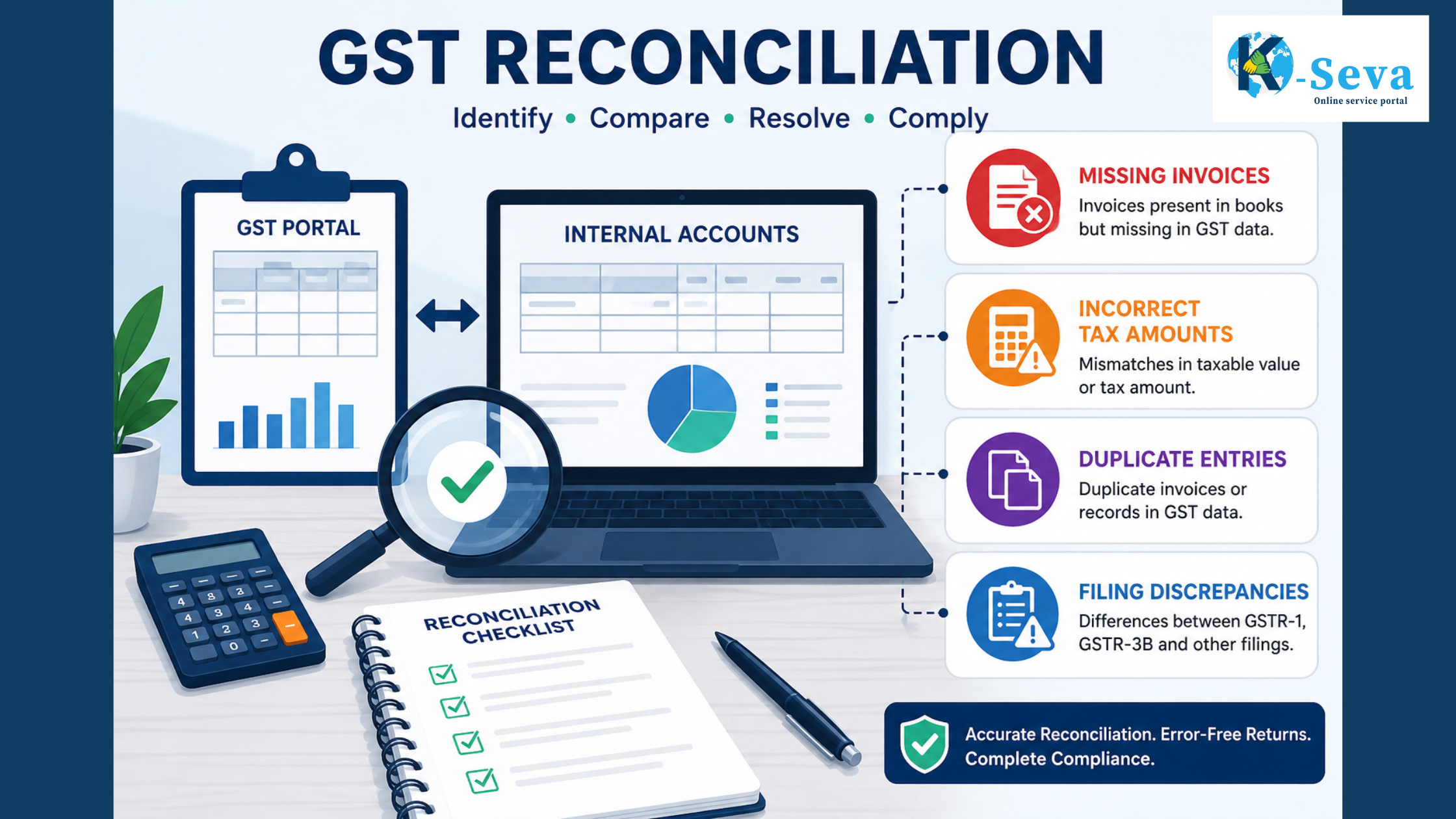
GST reconciliation involves matching data from different sources such as purchase registers, sales registers, GSTR-1, GSTR-3B, GSTR-2B, e-invoices, and other GST-related records. The primary goal is to verify that the data submitted on the GST portal accurately aligns with the business's internal financial and accounting records. Any discrepancies identified during reconciliation can be corrected before they lead to compliance issues.
Why is GST Reconciliation Important?
1. Accurate Input Tax Credit Claims
Businesses can claim ITC only on eligible invoices reflected in GST records. Reconciliation helps identify missing invoices, supplier filing delays, and incorrect tax credits before returns are filed.
2. Prevention of GST Notices and Penalties
Incorrect GST filings, mismatched invoices, or excess ITC claims may trigger departmental notices. Regular reconciliation reduces the chances of compliance-related disputes.
3. Improved Financial Accuracy
Matching GST returns with accounting records ensures that sales, purchases, tax liabilities, and credits are accurately recorded in the books.
4. Better Cash Flow Management
Unclaimed or blocked ITC can affect working capital. Timely reconciliation helps businesses maximize eligible tax credits and maintain healthy cash flow.
5. Easier Annual Return Filing
Monthly and quarterly reconciliations simplify year-end GST filings and reduce the burden of correcting large volumes of data later.
Types of GST Reconciliation
GSTR-2B vs Purchase Register Reconciliation
This process verifies whether all purchase invoices recorded in the books are reflected in GSTR-2B for ITC eligibility.
GSTR-1 vs Sales Register Reconciliation
It ensures that all outward supplies reported in GST returns match the company's sales records.
GSTR-3B vs GSTR-1 Reconciliation
Businesses compare tax liabilities reported in both returns to identify under-reporting or over-reporting of GST.
Vendor Reconciliation
Supplier-wise reconciliation helps businesses track vendors who have not uploaded invoices or filed returns correctly.
Annual GST Reconciliation
This reconciliation compares annual financial statements with GST returns filed throughout the financial year to ensure complete accuracy.
Common GST Reconciliation Challenges
- Missing invoices in GSTR-2B
- Incorrect GSTIN details
- Duplicate invoice entries
- Vendor filing delays
- Tax rate mismatches
- Credit note and debit note discrepancies
- Data entry errors in accounting software
- Differences between GSTR-1 and GSTR-3B filings
Steps Involved in GST Reconciliation
Step 1: Collect Required Data
Gather purchase registers, sales registers, GSTR-1, GSTR-3B, GSTR-2B, e-invoices, and other relevant documents.
Step 2: Compare Records
Match invoice details, taxable values, GST amounts, and vendor information across all records.
Step 3: Identify Mismatches
Identify and review missing invoices, inaccurate tax calculations, duplicate records, and inconsistencies in GST return filings.
Step 4: Resolve Differences
Coordinate with vendors, update accounting records, and make necessary corrections in GST returns.
Step 5: File Accurate Returns
After reconciliation, submit GST returns with confidence and maintain proper documentation for future audits.
How K-Seva Helps with GST Reconciliation
At K-Seva GST Reconciliation Services, businesses receive professional assistance in matching GST records, verifying ITC eligibility, identifying discrepancies, and maintaining compliance with GST regulations. The service helps reduce manual effort, improve accuracy, and streamline tax management for businesses of all sizes.
Conclusion
GST reconciliation is an essential part of effective tax compliance and financial management. Regular reconciliation helps businesses avoid errors, claim accurate Input Tax Credit, improve cash flow, and stay compliant with GST regulations. By adopting a systematic reconciliation process, organizations can reduce compliance risks and focus on business growth while maintaining accurate financial records.