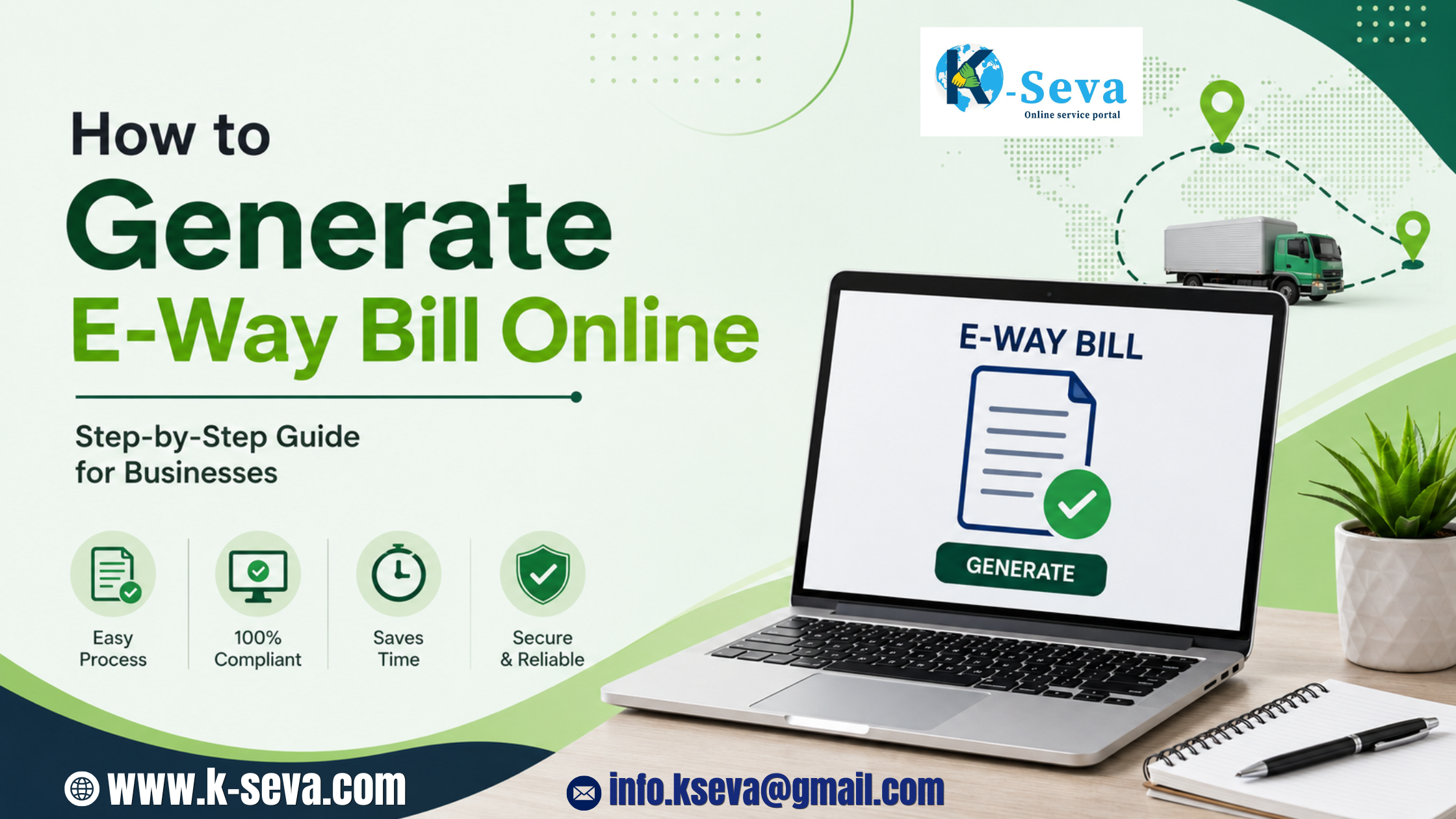
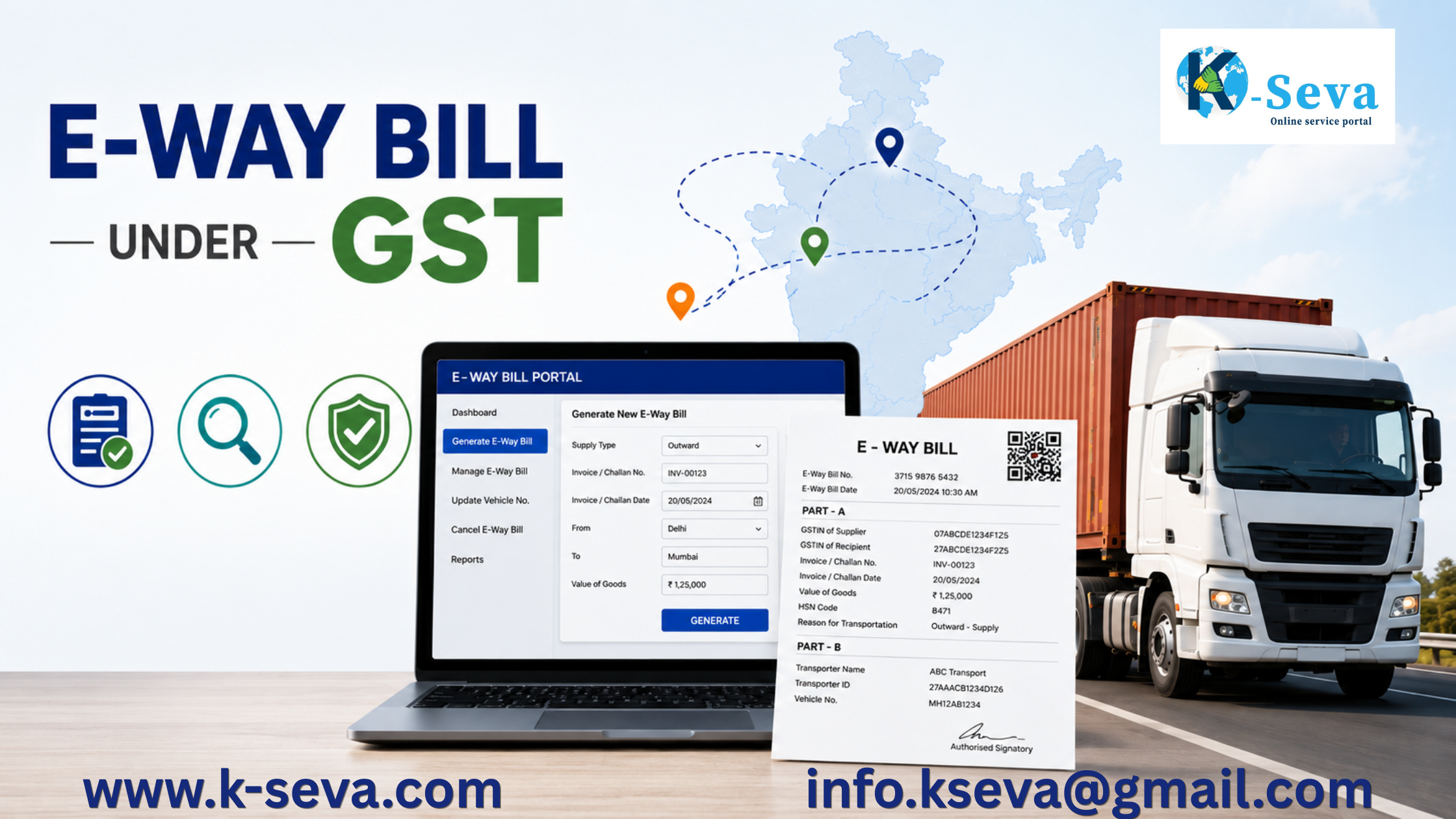
Understanding E-Way Bill Under GST: A Complete Guide for Businesses
In today’s digital tax environment, compliance with GST regulations is essential for businesses involved in the transportation of goods. One of the most important requirements under GST is the E-Way Bill system. It facilitates the smooth transportation of goods, enhances transparency in transactions, and helps prevent tax-related irregularities. Understanding how E-Way Bills work can help businesses avoid penalties and ensure smooth logistics operations.
What Is an E-Way Bill?
An E-Way Bill (Electronic Way Bill) is a digital document generated on the GST portal for the movement of goods from one location to another. It serves as proof that the goods being transported comply with GST regulations and contain all necessary transaction details. An E-Way Bill is generally required when the value of the goods being transported exceeds ₹50,000.
Why Is the E-Way Bill Important?
The E-Way Bill system was introduced to create a unified mechanism for tracking the movement of goods across India. Before GST, different states had different documentation requirements, creating logistical challenges. The digital E-Way Bill system simplifies compliance and facilitates faster transportation of goods.
Key Benefits Include:
- Improved transparency in goods movement
- Reduced paperwork and manual documentation
- Faster transportation and fewer delays
- Better compliance with GST regulations
- Reduced chances of tax evasion
- Simplified logistics management
When Is an E-Way Bill Required?
An E-Way Bill is typically mandatory when:
- Goods worth more than ₹50,000 are being transported.
- Goods are moved for supply purposes.
- Goods are transported for reasons other than supply, such as returns or transfers.
- Goods are received from an unregistered supplier under specified circumstances.
Who Should Generate the E-Way Bill?
The responsibility for generating an E-Way Bill depends on the mode of transportation and the parties involved:
Supplier
If the supplier is transporting the goods using their own vehicle or a hired vehicle, they must generate the E-Way Bill.
Recipient
If the recipient arranges transportation, they may be responsible for generating the E-Way Bill.
Transporter
When the value of goods being transported exceeds the specified threshold and neither the supplier nor the recipient generates the E-Way Bill, the responsibility falls on the transporter to create the E-Way Bill before commencing the transportation of goods.
Information Required for Generating an E-Way Bill
To create an E-Way Bill, the following details are generally needed:
- GSTIN of supplier and recipient
- Invoice or challan number and date
- Description of goods
- HSN code
- Quantity and value of goods
- Place of dispatch and delivery
- Transporter details
- Vehicle number or transport document number
The E-Way Bill consists of two sections:
Part A
Contains invoice details, GSTIN information, value of goods, and transportation reason.
Part B
Includes transporter information and vehicle details required for completing the E-Way Bill generation process.
Steps to Generate an E-Way Bill
- Log in to the E-Way Bill portal.
- Choose the option for creating a new E-Way Bill on the portal.
- Enter transaction details and invoice information.
- Fill in transporter and vehicle details.
- Verify all information carefully.
- Submit the form to generate the E-Way Bill.
- Save or print the generated document for transportation purposes.
Common Mistakes to Avoid
Businesses should be cautious about:
- Entering incorrect GSTIN numbers
- Providing inaccurate vehicle details
- Using incorrect HSN codes
- Failing to update transportation information
- Generating E-Way Bills with invoice discrepancies
Such mistakes can result in compliance issues and penalties.
Conclusion
The E-Way Bill system plays a crucial role in ensuring smooth and compliant transportation of goods under GST. By understanding the requirements, maintaining accurate records, and generating E-Way Bills correctly, businesses can improve operational efficiency while staying compliant with tax regulations. As logistics and taxation processes continue to become more digital, proper E-Way Bill management remains an essential aspect of modern business operations in India.