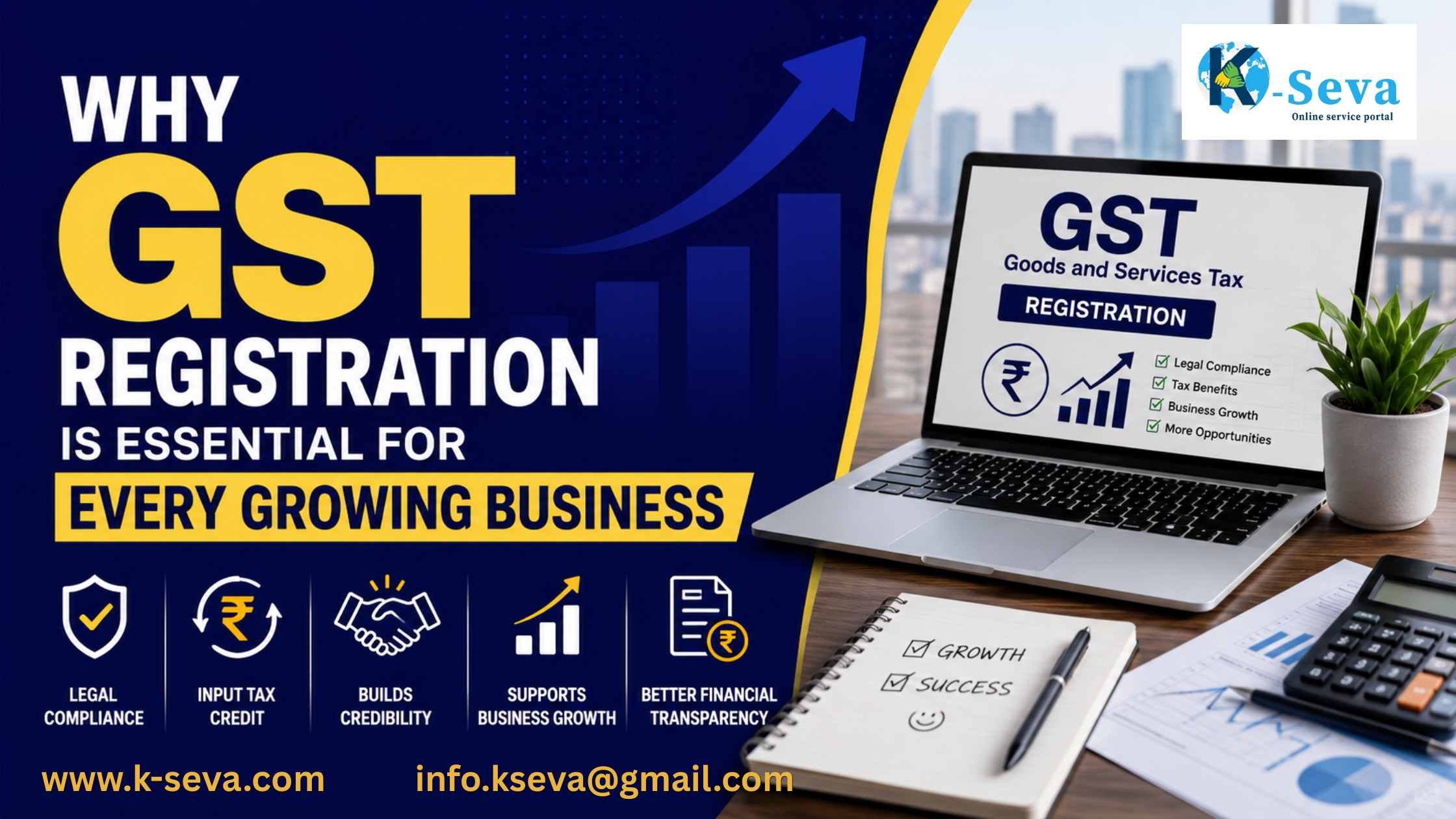
Why GST Registration Is Essential for Every Growing Business
As businesses expand, managing taxes and maintaining legal compliance become increasingly important. Whether you operate a startup, an MSME, an online store, or a service-based business, GST (Goods and Services Tax) registration plays a crucial role in supporting sustainable growth. It is more than just a legal requirement—it is a foundation for building credibility, improving financial management, and unlocking new business opportunities.
Many entrepreneurs assume that GST registration is only necessary after reaching a certain turnover limit. While mandatory registration applies in specific cases, many businesses choose voluntary GST registration because of the long-term benefits it offers. Registering under GST helps businesses operate transparently, gain customer trust, and remain compliant with tax regulations.
Let's explore why GST registration is essential for every growing business.
Understanding GST Registration
GST Registration is the process of obtaining a Goods and Services Tax Identification Number (GSTIN) from the government. Once registered, a business is authorized to collect GST from customers, file GST returns, and claim eligible Input Tax Credit (ITC) on business purchases.
The registration process has been simplified through online portals, making it easier for businesses to complete the formalities without unnecessary delays.
1. Ensures Legal Compliance
One of the biggest reasons to register under GST is to remain compliant with India's tax laws.
Businesses that are required to register but continue operating without GST registration may face penalties, interest charges, and legal complications. Staying compliant protects your business from unnecessary financial risks and helps maintain a positive reputation.
Following tax regulations from the beginning creates a strong foundation for future growth.
2. Builds Business Credibility
Customers, suppliers, investors, and financial institutions often prefer dealing with GST-registered businesses.
Displaying a valid GSTIN demonstrates that your business operates legally and follows government regulations. This enhances confidence among clients and encourages larger companies to establish business relationships with you.
A GST-registered business often appears more reliable and professional than an unregistered one.
3. Enables Input Tax Credit (ITC)
One of the most valuable benefits of GST registration is the ability to claim Input Tax Credit (ITC).
Businesses pay GST while purchasing goods, raw materials, equipment, software, and services. With GST registration, this tax can often be adjusted against the GST collected from customers.
This helps:
- Reduce overall tax liability
- Lower operational costs
- Improve cash flow
- Increase profitability
For growing businesses, these savings can significantly impact long-term financial health.
4. Supports Business Expansion
As your business grows, you may begin serving customers across multiple states or through online platforms.
GST registration makes it easier to expand operations because it enables businesses to conduct interstate transactions while remaining compliant with tax regulations.
Whether you are opening new branches, supplying products nationwide, or offering digital services, GST registration supports smooth expansion.
5. Required for E-Commerce Sellers
Selling products through online marketplaces has become common for businesses of all sizes.
Most major e-commerce platforms require sellers to have GST registration before listing products or providing services.
If your business plans to sell through digital marketplaces, GST registration is often a mandatory requirement for smooth onboarding and operations.
6. Improves Financial Transparency
GST registration encourages businesses to maintain proper invoices, purchase records, tax documents, and accounting systems.
Accurate financial records help businesses:
- Track expenses
- Monitor revenue
- Prepare financial statements
- File tax returns correctly
- Make informed business decisions
Good record-keeping also simplifies audits and reduces the chances of tax-related disputes.
7. Increases Opportunities for Government and Corporate Contracts
Many government tenders and corporate procurement projects require vendors to possess a valid GST registration.
Without GST registration, businesses may miss opportunities to participate in large contracts that can significantly increase revenue.
Being GST-registered opens doors to larger and more profitable business opportunities.
8. Simplifies Tax Structure
Before GST was introduced, businesses had to deal with multiple indirect taxes such as VAT, service tax, and excise duty.
GST simplified the taxation system by bringing several indirect taxes under one unified structure.
This makes tax compliance easier, reduces confusion, and streamlines business operations.
9. Enhances Customer Confidence
Today's customers appreciate transparency.
When businesses issue GST-compliant invoices, customers gain confidence that they are dealing with a genuine and legally compliant organization.
This transparency helps strengthen customer relationships and encourages repeat business.
10. Makes Business Loans Easier
Financial institutions often review a company's financial records before approving business loans or working capital financing.
GST returns provide documented evidence of:
- Business turnover
- Revenue consistency
- Tax compliance
- Financial discipline
Maintaining regular GST filings can improve your credibility when applying for loans or seeking investment.
11. Supports Better Business Planning
GST records provide valuable insights into sales performance, expenses, purchasing trends, and tax liabilities.
These insights help business owners:
- Forecast revenue
- Manage inventory efficiently
- Plan future investments
- Improve budgeting
- Identify growth opportunities
Reliable financial data leads to smarter business decisions.
12. Encourages Long-Term Growth
Many businesses start small but eventually expand into larger markets.
Registering under GST early helps businesses establish organized financial systems from the beginning. This minimizes compliance challenges as operations grow.
Businesses that maintain proper tax records often find it easier to scale, attract investors, and enter new markets.
Tips for Smooth GST Registration
To ensure a hassle-free registration process:
- Keep all required business documents ready.
- Verify the accuracy of PAN, Aadhaar, and business details.
- Use the correct business address.
- Maintain updated bank account information.
- Submit all supporting documents clearly.
- Review the application carefully before submission.
- Keep digital copies of all registration documents for future reference.
Proper preparation helps avoid delays or application rejection.
Conclusion
GST registration is not merely a legal obligation—it is an important milestone in building a successful business. It helps businesses remain compliant, improve financial transparency, claim valuable tax credits, and strengthen their credibility in the marketplace.
Whether you are launching a startup, expanding an MSME, operating an online business, or offering professional services, GST registration provides the confidence and structure needed for sustainable growth. By registering early and maintaining regular compliance, businesses can unlock new opportunities, improve operational efficiency, and build a strong foundation for long-term success.